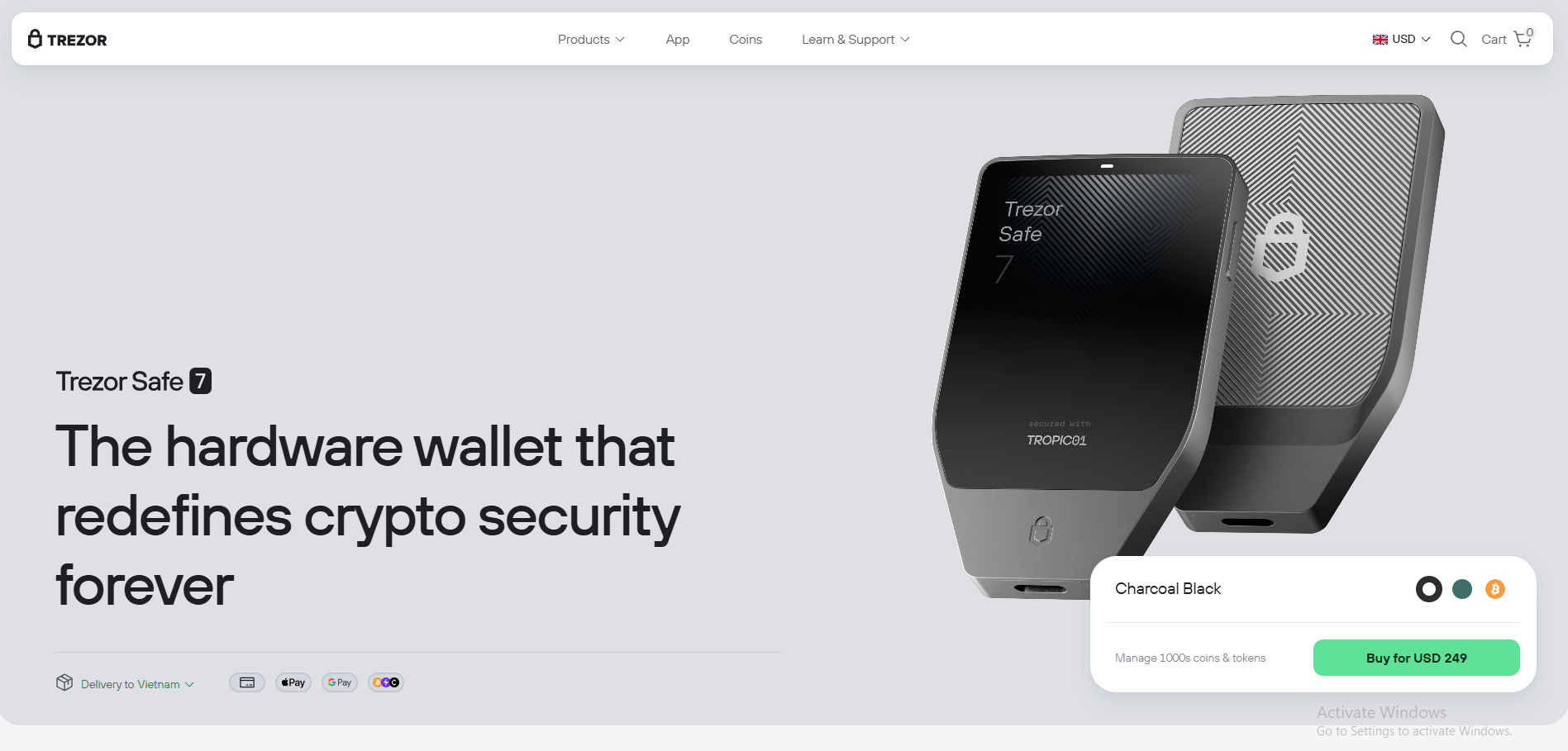
🔐 Overview of Trezor
In a crypto landscape shaped by exchange hacks, platform collapses, and growing concerns over asset ownership, Trezor stands as a reminder of what crypto was originally meant to be: full control, zero intermediaries.
Founded by SatoshiLabs, Trezor wasn’t just early to the market—it helped define it. As the creator of the first-ever hardware wallet, the brand introduced a concept that has since become essential: keeping your private keys offline, isolated, and untouchable by online threats.
At its core, Trezor.io is more than a storefront—it’s a gateway into self-custody. Instead of trusting exchanges or third-party platforms to hold your assets, Trezor gives you a physical device that acts as a secure vault for your crypto identity.
Here’s how it works in practice:
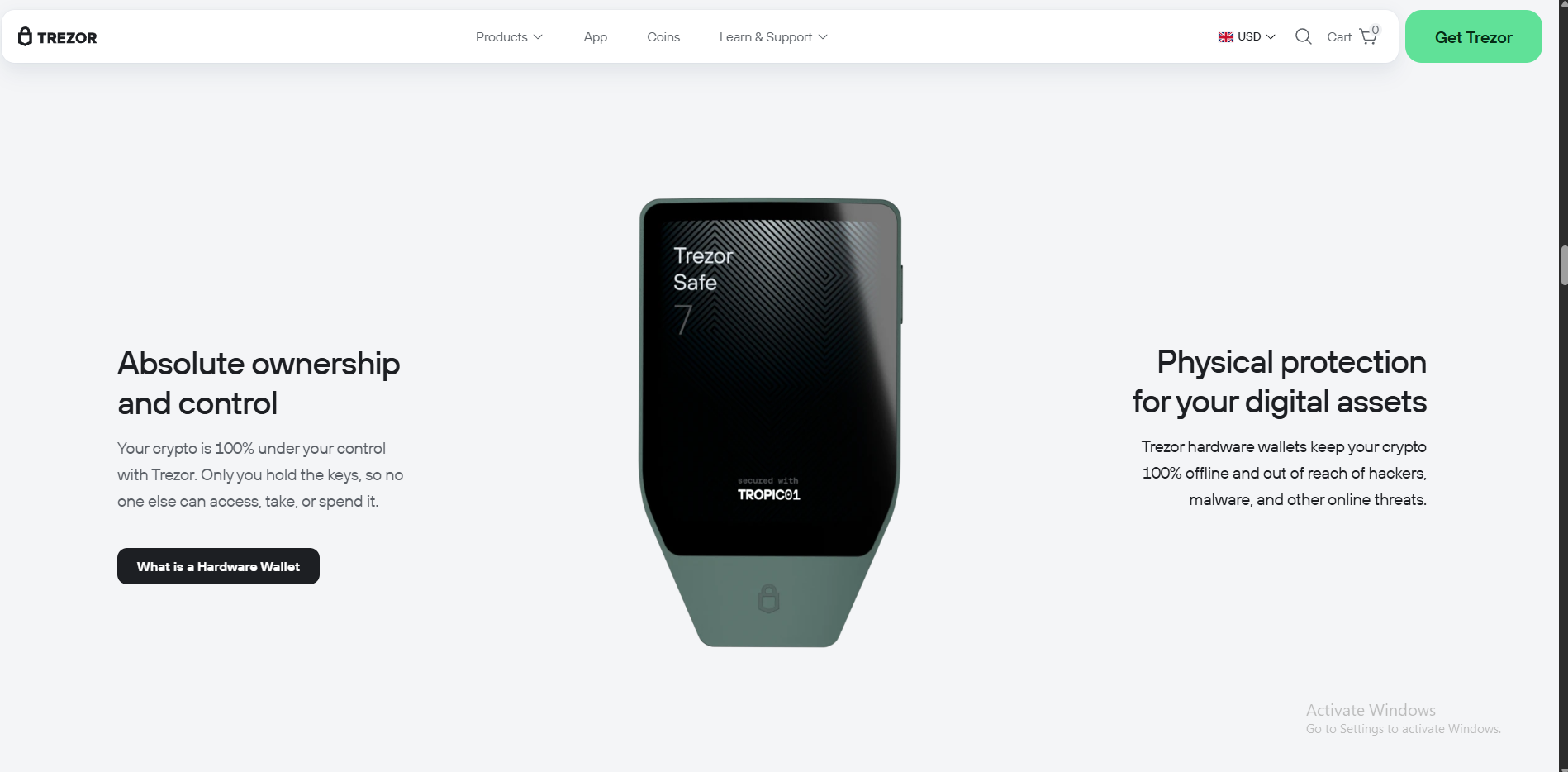
When you use a Trezor device, your private keys never touch the internet. Every transaction must be manually confirmed on the device itself, meaning even if your computer is compromised, your funds remain protected. It’s a simple idea—but one that dramatically reduces risk.
The ecosystem is built around the Trezor Suite, a clean and focused interface that allows users to:
- Manage multiple crypto assets
- Monitor portfolio performance
- Execute transactions securely
- Connect to external wallets and DeFi tools
Unlike many modern platforms that try to “do everything,” Trezor keeps its core mission clear: security first, convenience second.
Another defining characteristic is its open-source foundation. Every critical component—from firmware to software—is publicly available for inspection. This isn’t just a technical detail; it’s a philosophical stance. Trezor doesn’t ask for blind trust—it invites verification.
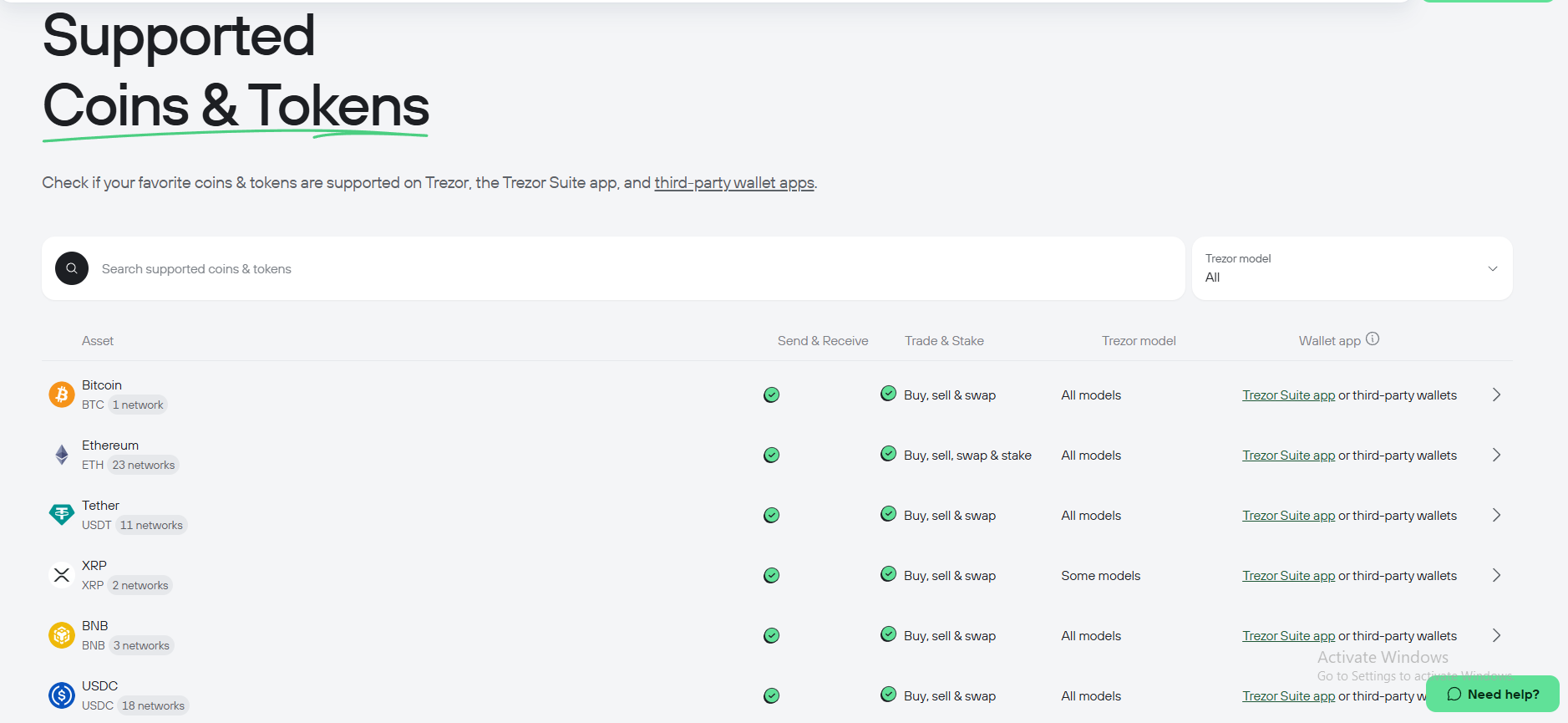
In terms of compatibility, Trezor supports a wide range of cryptocurrencies and integrates smoothly with tools like MetaMask, giving users the flexibility to move beyond simple storage into more advanced use cases.
Overall, Trezor positions itself not as a flashy product, but as a long-term security tool—something you rely on quietly in the background while your crypto grows.
✅ Pros of Trezor
What makes Trezor compelling isn’t just its feature list—it’s the clarity of its purpose.
First, there’s the obvious: security that actually reduces real-world risk. By removing private keys from internet-connected environments, Trezor eliminates the most common attack vectors in crypto. No phishing link, malware infection, or exchange breach can directly access your funds without physical confirmation on the device.
But beyond that, Trezor offers something less tangible and more valuable: control. You’re not logging into an account—you’re holding your own keys. In a market where “not your keys, not your coins” has proven true time and again, this level of ownership is a major advantage.
Another standout feature is its transparency-first approach. Being fully open-source means the global developer community can continuously audit and improve the system. This creates a level of accountability that closed ecosystems simply can’t match.
From a usability perspective, Trezor strikes a careful balance. It doesn’t oversimplify security, but it also doesn’t overwhelm users. The onboarding process is structured, the interface is clean, and the learning curve—while real—is manageable for anyone willing to understand the basics.
Flexibility is another strong point. Trezor doesn’t lock users into a single ecosystem. Instead, it works seamlessly with a wide range of third-party wallets and decentralized applications. This makes it especially appealing for users who want to explore beyond basic storage into DeFi, NFTs, or multi-chain environments.
There’s also the advantage of proven reliability. In an industry where many projects come and go, Trezor’s decade-long presence signals stability. It has survived multiple market cycles, adapted to new technologies, and maintained its reputation as a trusted security solution.
Finally, Trezor delivers peace of mind—and that’s ultimately what you’re paying for. Not features, not design, but the confidence that your assets are safe from the most common threats in crypto.
❌ Cons of Trezor
For all its credibility and security-first mindset, Trezor isn’t flawless—and the downsides become clearer the more you understand how it works.
The most debated issue is its hardware security philosophy. Unlike competitors such as Ledger, Trezor historically avoids using a Secure Element chip. Instead, it relies on an open, auditable design. That sounds ideal in theory—and it is from a transparency standpoint—but it also means that hardware-level protection isn’t as hardened against sophisticated physical attacks. For the average user, this is unlikely to ever matter. But for high-value holders or those operating in high-risk environments, it’s a meaningful trade-off.
Then there’s the reality of self-custody responsibility. Trezor doesn’t hold your hand—and that’s by design. If you lose your recovery phrase, mismanage backups, or fall for a phishing attack, there is no fallback. No reset. No support ticket that brings your funds back. This is the purest form of ownership—but also the most unforgiving. In practice, it means Trezor is only as safe as the habits of the person using it.
From a usability perspective, Trezor is clean—but not fully “modern” in the way some users expect. Features like staking, token swapping, or interacting with DeFi are often not deeply integrated into the native interface. Instead, you’ll frequently rely on third-party tools. For experienced users, that’s flexibility. For beginners, it can feel like unnecessary friction.
There are also practical limitations in daily use. Most Trezor devices require a wired connection—no Bluetooth, no seamless mobile pairing. In a world where convenience is increasingly wireless, this makes Trezor feel slightly behind the curve. The hardware itself follows the same pattern: functional, reliable, but not particularly premium in look or feel.
And like every hardware wallet on the market, Trezor faces the persistent risk of counterfeit devices being sold through unofficial channels. The product itself is secure—but the supply chain can be a weak point if users don’t buy directly from trusted sources.
In short, Trezor is not trying to be the easiest or the flashiest option. It’s built for people who are willing to trade convenience for control and transparency—and that trade isn’t for everyone.
💰 Pricing of Trezor
Trezor’s pricing reflects its philosophy quite clearly: make security accessible, then let users pay for convenience—not safety.
At the entry level, the Trezor Model One comes in at around $69, making it one of the most affordable hardware wallets available. What’s important here is that you’re not buying a “lite” version of security. Even at this price, you get the same fundamental protection: offline key storage, transaction verification, and full self-custody. For many users, this is all they’ll ever need.
Step up slightly, and you’ll find newer devices like the Trezor Safe 3, typically priced between $79 and $99. This tier represents a more refined version of the entry experience—better hardware, updated architecture, and a more future-proof design. For most people, this is where the best value lies.
At the premium end, devices like the Trezor Model T push into the $179–$220 range. Here, the improvements are less about security and more about user experience. The touchscreen, for example, allows you to input sensitive information directly on the device, reducing reliance on your computer and improving usability. It’s a smoother experience—but not a fundamentally “safer” one.
Compared to competitors like Ledger, Trezor tends to:
- Compete closely on price
- Offer slightly better accessibility at the low end
- Focus less on premium hardware features
What stands out is the absence of ongoing costs. There are no subscriptions, no hidden fees, and no paid unlocks. You buy the device once, and it does its job indefinitely.
That said, the value of Trezor isn’t obvious if you’re holding small amounts of crypto. For casual users, spending $70–$200 on a hardware wallet may feel unnecessary—especially when software wallets are free. But that comparison misses the point.
Trezor isn’t competing with free apps. It’s competing with risk.
And when you frame it that way, the pricing starts to make a lot more sense.